
Efficient Shirt Folding for Neat, Ready-to-Wear Delivery
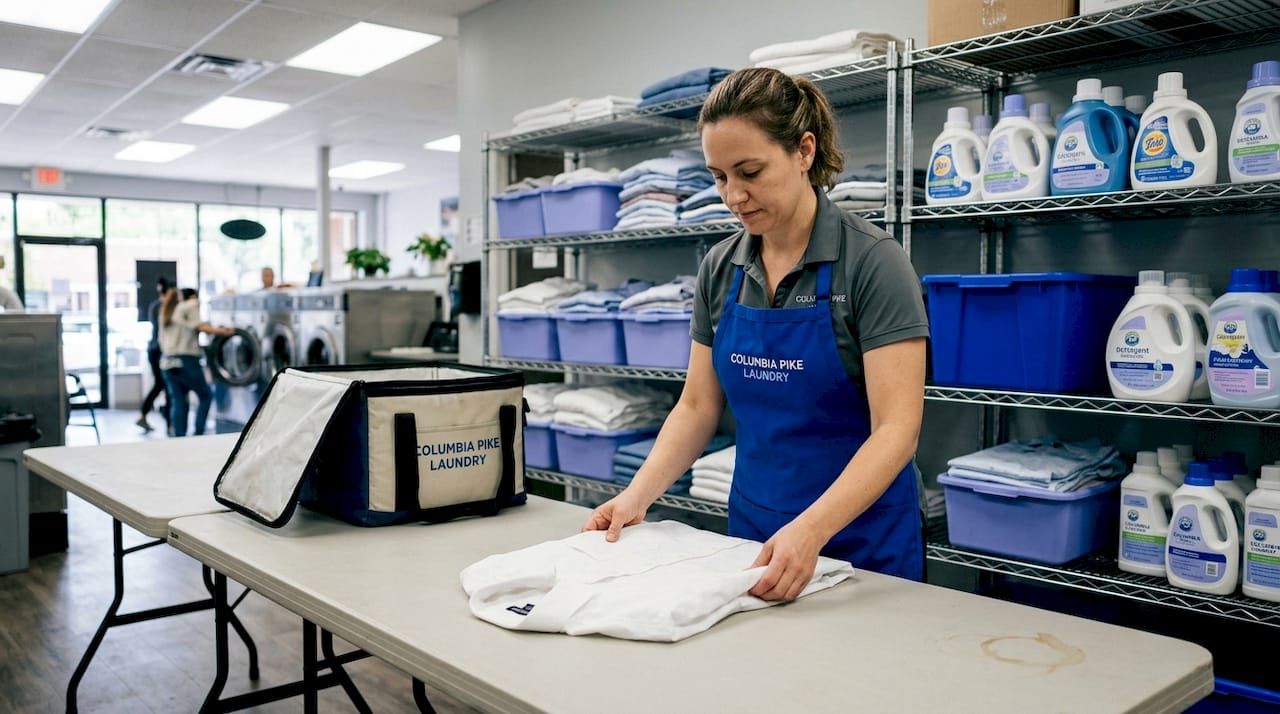
Columbia Pike Laundry offers pickup & delivery across Northern Virginia.
TL;DR:
- A crumpled, poorly folded shirt delivery causes frustration for busy professionals and small business owners.
- Using folding boards or practiced manual techniques ensures consistent, neat folds suitable for efficient, high-volume delivery.
You open the delivery bag, and there it is: a crumpled mess where your freshly laundered shirts should be. One sleeve is sticking out at an odd angle, the collar is bent, and the whole stack looks like it was packed during an earthquake. For a busy Arlington professional heading into back-to-back meetings, or a small business owner who simply cannot afford to waste twenty minutes with an iron before 8 a.m., that moment is genuinely frustrating. The good news? Getting shirts to arrive perfectly folded and ready to wear is a skill with clear, repeatable steps, and this guide walks you through every one of them.
Key Takeaways
| Point | Details |
|---|---|
| Gather your tools | Using folding boards and breathable bags makes shirt folding for delivery more efficient and professional. |
| Choose your folding method | The retail, Japanese, and folding board methods each balance speed and consistency for shirt delivery. |
| Consistent packaging matters | Uniform folding and correct packaging ensure shirts arrive crease-free and customer-ready. |
| Avoid common pitfalls | Troubleshoot uneven folds or packaging issues before shirts go out for delivery. |
| Professional service available | You can save time and guarantee top results by using a professional laundry delivery service. |
What you need for professional shirt folding and delivery
Once you know the stakes, the right preparation makes all the difference. The single biggest variable between a shirt that arrives looking store-bought and one that arrives looking lived-in is your setup before you even touch the first garment.
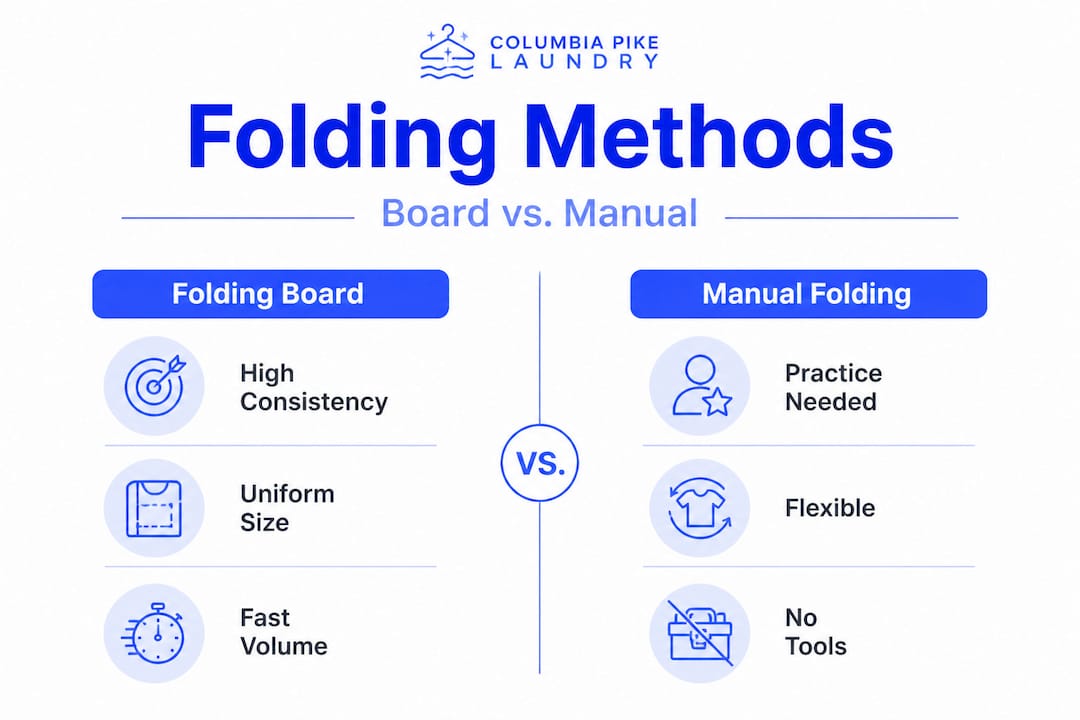
Folding board vs. manual folding
A folding board is a flat, rigid panel that acts as a template. You place a shirt face down on top, fold one side over the board, then the other, tuck the sleeves flat, fold the bottom up, and slide the board out. The result is a clean, uniform rectangle every single time. The folding board method produces uniform, consistent folds ideal for delivery stacking, making it the preferred choice when you are handling more than a handful of shirts at once.
Manual folding, on the other hand, requires practice. It takes longer to master but costs nothing and works anywhere there is a flat surface. The table below breaks down how the two approaches compare for a typical delivery workflow.
| Factor | Folding board | Manual folding |
|---|---|---|
| Consistency | Very high | Moderate (improves with practice) |
| Speed (after practice) | Fast | Fastest with 2-second fold |
| Equipment needed | Folding board | Flat surface only |
| Best for | Volume orders, business deliveries | Quick single-shirt turnaround |
| Learning curve | Low | Medium to high |
The right packaging from the start
Packaging is not an afterthought. The best practices for delivery packaging are clear: fold shirts to a consistent finished size, such as 9x12 inches, and use breathable bags rather than tight plastic to prevent creases during transport. Tight plastic traps moisture and heat, both of which relax fibers and cause new wrinkles to form mid-transit.
Other essentials to gather before you start:
- A clean, flat, hard surface at least 24 inches wide
- A folding board sized for your most common shirt type
- Breathable polybags or tissue-lined garment bags for finished shirts
- Rubber bands or paper belly bands (for keeping stacks organized, not for compressing shirts)
- Labels for order identification if you are handling multiple customers
You can read more about the most effective folding techniques for busy pros and find quick folding tips that apply directly to high-volume, time-sensitive situations.
Step-by-step shirt folding methods for delivery perfection
With supplies in hand, let’s break down exactly how to fold every shirt with precision and speed. There are three methods worth knowing: the retail fold, the Japanese 2-second fold, and the folding board technique. Each has its place.
Method 1: The retail fold (universal consistency)
This is the standard retail folding method used by clothing stores everywhere, and for good reason. It produces a tidy rectangle that stacks easily.
- Lay the shirt face down on a flat surface.
- Fold the right side to the center, aligning the edge just past the shoulder seam.
- Fold the right sleeve back so it sits parallel to the folded edge.
- Repeat on the left side.
- Fold the bottom of the shirt up to the collar in one or two folds, depending on shirt length.
- Flip the whole thing over. The collar and chest should be face up, with no raw edges visible.
Method 2: The Japanese 2-second fold (speed)
The Japanese fold technique is efficient for busy professionals dealing with a stack of T-shirts. Lay the shirt flat and face up. Pinch the shoulder with one hand and the corresponding mid-body point with the other. Cross your hands over each other in one fluid motion, which folds the shirt in half. Lay it down, fold the bottom up, and you are done. It sounds complicated until you see it once, then it clicks instantly.
Method 3: The folding board technique (volume and uniformity)
Place the shirt face down on the board. Fold the left panel over, sleeve and all. Fold the right panel over. Fold the bottom up. Slide the board out while pressing gently. Every shirt will match the next in size and shape. This method shines when you are preparing ten, twenty, or fifty shirts for delivery.

Pro Tip: Always fold in the same direction for every shirt in a batch. Consistency is not just visual. It means every shirt stacks at the same height, which prevents the kind of shifting inside a delivery bag that causes creases.
| Method | Speed | Consistency | Best use case |
|---|---|---|---|
| Retail fold | Moderate | High | Dress shirts, button-ups |
| Japanese 2-second | Very fast | Moderate | T-shirts, casual wear |
| Folding board | Fast | Very high | High-volume delivery batches |
For a deeper look at applying these methods to specific garment types, the step-by-step folding guide on our blog walks through fabric-specific variations. You can also find detailed guidance on folding dress shirts specifically, since button-front shirts have their own quirks around collar stiffness and placket alignment. When you need efficient folding methods that hold up under real-world time pressure, a combination of the retail fold for dress shirts and the Japanese fold for casual garments often works best.
Packaging tips: Ensuring shirts arrive neat and delivery-ready
Once each shirt is perfectly folded, how they’re packaged is just as important for delivery results. A beautifully folded shirt can still arrive wrinkled if the packaging undermines all your hard work.
Building stackable bundles
The key principle is consistency of size. When every shirt is folded to the same dimensions, stacking them is clean and tight. Stacks that are uneven at the edges allow shirts to slide during transit, which creates new folds in places you did not intend. Aim for uniform 9x12 inch folds as a standard, and use breathable bags to avoid the crease-inducing moisture buildup that tight plastic causes.
A shirt that arrives looking like it just came off a retail shelf is a silent message: someone who cares about the details handled your order.
Common packaging mistakes and how to avoid them:
- Overpacking bags: Squeezing too many shirts into one bag compresses them unevenly, causing diagonal creases across the chest and shoulders.
- Using elastic bands directly on shirts: Rubber bands leave indentations, especially on lightweight fabrics. Use belly bands around the outside of the bag instead.
- Mixing shirt sizes in one stack: Different sizes fold to different dimensions. Keep sizes together so each stack is uniform.
- Skipping a bottom layer of tissue: For dress shirts or delicate fabrics, a single layer of tissue paper between shirts absorbs minor moisture and reduces friction.
- Ignoring collar orientation: Stack shirts with collars all facing the same direction so the weight distributes evenly and collars do not press into adjacent garments.
Pro Tip: Place a cardboard insert inside the delivery bag before stacking shirts. It creates a flat, rigid bottom that prevents the stack from folding in on itself if the bag gets bumped or tilted.
Learn more about the full wash and fold delivery service process and review laundry pickup best practices to understand how professional services build these steps into every order automatically.
Common pitfalls and troubleshooting for shirt delivery folding
Perfect execution isn’t always guaranteed. Here’s how to recover when things go sideways, and how to build habits that prevent problems from happening in the first place.
The most common errors and their fixes:
- Uneven side folds: One side is wider than the other, making the finished shirt look lopsided. Fix: Lay the shirt exactly face down before starting. Use a reference point, like a table edge or a line of tape, to align the center of the collar every time.
- Sleeve bunching: Sleeves fold back untidily and create a bulge. Fix: Smooth the sleeve fully flat before folding it back. For long-sleeve shirts, fold the cuff back first, then fold the sleeve parallel to the shirt body.
- Collar bending: The collar gets crushed during folding. Fix: For button-front shirts, button the top two buttons before folding. This holds the collar in shape through transit.
- Stack shifting in the bag: Shirts slide around and arrive disorganized. Fix: Insert a belly band around the entire stack before placing it in the bag.
- Creases at the fold points: Sharp fold lines become permanent with heat. Fix: Avoid leaving folded shirts in direct sunlight or a hot car. The heat sets creases into fabric, especially synthetic blends.
Volume and speed considerations
The 2-second Japanese fold is an efficiency benchmark: it saves significant time in high-volume delivery settings, while folding boards ensure uniformity and reduce the need for re-folding. In practice, an experienced folder using a board can process a shirt in under ten seconds. Across a batch of thirty shirts, that is under five minutes of total folding time. The investment in learning the method pays itself back almost immediately.
Pro Tip: Time yourself on a batch of ten shirts using each method. Most people discover their natural “hybrid” approach within a few sessions: the folding board for button-ups and the Japanese fold for everything else.
When errors become a pattern rather than an occasional slip, the issue is usually in the process setup, not the execution. Review the commercial folding best practices used by professional services, and consider whether your current workspace is set up for repeatability. A dedicated professional folding service eliminates most of these variables entirely by building consistency into every step.
Why speed isn’t everything: Lessons from real shirt delivery pros
Here is something you rarely hear from efficiency guides: the professionals who handle the highest volumes of laundry delivery are usually not the fastest folders. They are the most consistent ones.
Speed is seductive. The Japanese fold looks impressive, and shaving a few seconds off each shirt feels like a win. But in a real delivery workflow, a shirt that folds in two seconds and then has to be re-folded costs you more time than the shirt that took eight seconds to fold correctly the first time. That is a lesson that takes most people a while to internalize.
The delivery experience is also a brand statement. When a busy Arlington professional opens their laundry bag and every shirt is identically folded, collar up, edges aligned, it signals that the person who handled their order respected their time and their wardrobe. That impression matters. It is the reason why clients stay with services they trust rather than bouncing to whatever is cheapest this week.
The other overlooked factor is fabric behavior. Some shirts, particularly loosely woven linens or stretch-blend dress shirts, simply do not hold a fold as crisply as a cotton poplin. Recognizing this early and adjusting your approach (slightly tighter fold, tissue paper between layers) is what separates someone who is good at folding from someone who is genuinely skilled at it. The wash and fold workflow used by experienced laundry professionals accounts for these fabric differences at every stage, not just at the folding step.
Invest a few extra seconds on the first shirt in a batch to get your reference fold right. Every shirt after that becomes easier, faster, and more consistent. The real efficiency gain is not in folding faster. It is in never having to re-fold.
Let our laundry pros fold and deliver for you
If this all sounds like a lot to juggle alongside a full workweek, there’s an easier way. At Columbia Pike Laundry, we handle every step of this process for Arlington professionals and small business owners who have better things to do than fold shirts at 10 p.m. Our team works with folding boards, consistent sizing, and breathable packaging on every single order. We support custom preferences including specific fold styles, fragrance-free detergents, and special handling for delicate fabrics. Learn exactly how our laundry process works: schedule a pickup through our app, we clean and fold everything in-house, and a driver returns your shirts folded, pressed, and ready to wear within 48 hours. No middleman, no guesswork, no re-folding on your end.
Frequently asked questions
What is the best way to fold shirts for delivery?
The retail fold or folding board method is best for delivery, since both produce consistent, compact rectangles that stack neatly without shifting in transit.
How do I prevent creases while transporting folded shirts?
Use breathable bags and fold all shirts to a uniform size, such as 9x12 inches, so stacks stay tight and stable inside the delivery bag.
Is the Japanese 2-second fold suitable for delivery?
The Japanese 2-second fold is excellent for speed with T-shirts, but it works best for delivery when paired with a folding board to ensure uniform sizing across the full batch.
How long does it take to fold shirts for delivery?
With a folding board or the 2-second Japanese fold, most people can fold each shirt in under ten seconds after a short practice session, making a batch of thirty shirts a five-minute task.
Free pickup, expert care, delivered back to your door.
Popular Blog Articles


Meet the Author
Daniel Logan didn’t start CPL because he loved laundry. He started it because his family was drowning in time debt, and laundry was one of the biggest weights.
Mornings were chaos with two kids under 5. Evenings felt like catch-up. And weekends? Gone to sorting socks and folding piles.
He knew his story wasn’t unique. So he built a business that gave families like his just a little bit of breathing room one load at a time.
With no laundry experience but deep tech skills, Daniel rolled up his sleeves, doing every job himself while building systems that turned it into a modern laundry service that saves customers time, simplifies their lives, and delivers reliability they can count on.
That’s where CPL began. Not from a playbook, but from pain. From one dad trying to buy back time: for himself, and for every household like his.
Free pickup, expert care, delivered back to your door.