
How to Get Chocolate Out of White Clothes A Pro's Guide

Columbia Pike Laundry offers pickup & delivery across Northern Virginia.
We've all been there—that heart-stopping moment when a piece of delicious chocolate lands squarely on your favorite white shirt. It feels like a clothing catastrophe, but it doesn't have to be. Your first moves in the minutes after the spill are what really count.
Your First Five Minutes After a Chocolate Spill
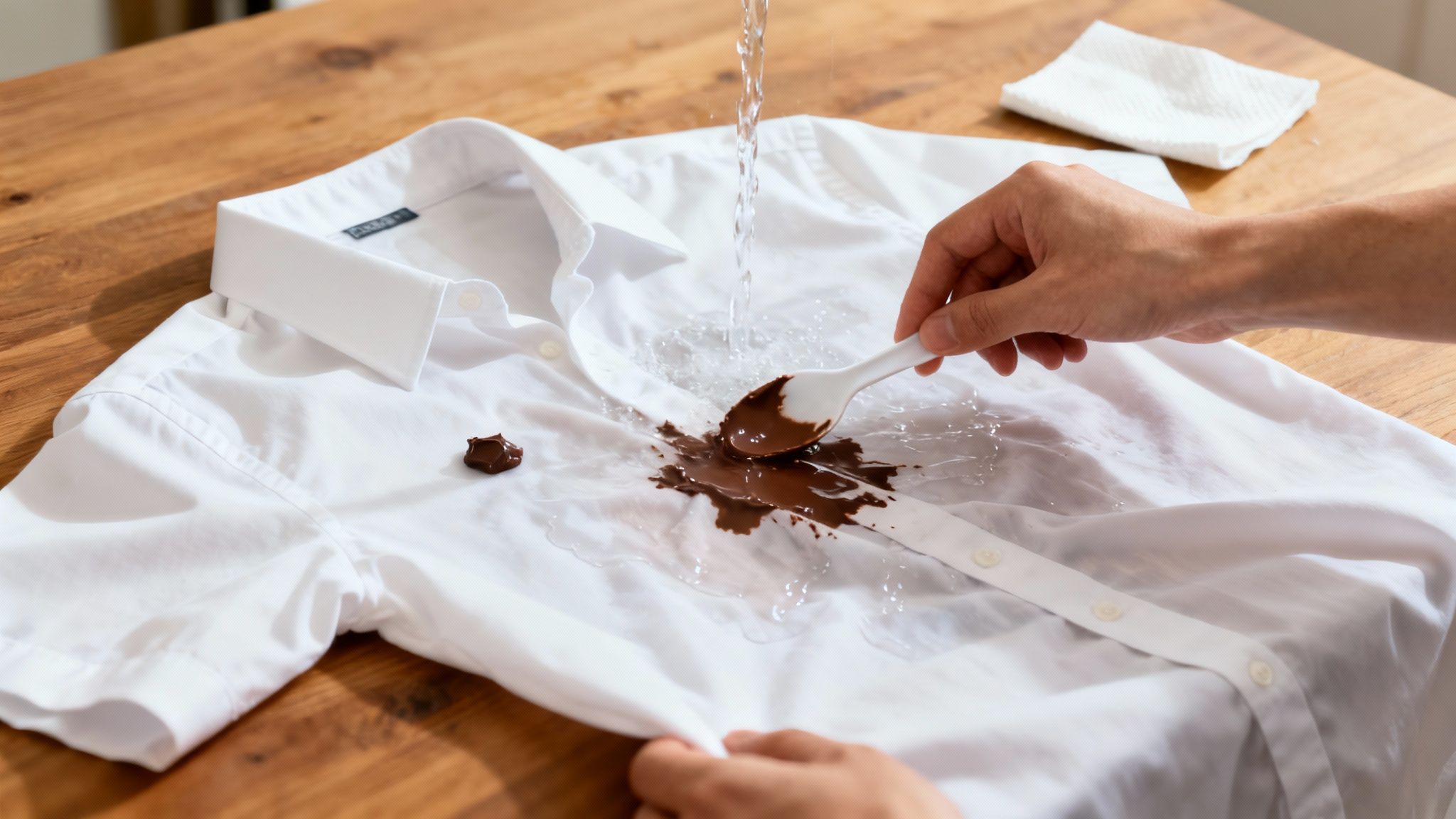
When you're dealing with a chocolate stain, time is not on your side. Chocolate is a tricky combination of oils (from cocoa butter) and dark tannins that want to embed themselves into fabric fibers immediately. Your goal in these first few moments isn't a miracle cure, but damage control. You're setting the stage for a successful wash later on.
To make it simple, here’s a quick-glance plan for what to do the second a spill happens.
Immediate Chocolate Stain Response Plan
Let's break down exactly what that looks like in practice.
Remove the Excess Solid Chocolate
First things first, get rid of any solid chocolate sitting on the surface. Find something with a dull edge—a spoon, a butter knife, or even a credit card will do the trick.
Carefully scrape the glob of chocolate off the fabric. The key here is to lift, not press. If you push down or start rubbing, you'll just grind the stain deeper into the clothing's fibers. Work from the outer edges of the spill inward to keep the mess from getting bigger.
Flush the Stain with Cold Water
With the solids gone, make your way to a sink. Turn the shirt or pants inside out and position the stained spot under a faucet of cold running water. This is a critical step. By running water through the back of the fabric, you're using the pressure to push the chocolate particles out the way they came in.
Pro Tip: Whatever you do, do not use hot water at this stage. The heat will essentially cook the proteins in the chocolate, setting the stain permanently. Cold water is your best friend here.
This reverse-flushing technique is incredibly effective. In fact, lab tests show that flushing a stain from the back can remove up to 50% more particles than rinsing from the front. If you're curious about the science, you can learn more about how different stain removers work on specific stain types in our detailed guide.
Blot, Don't Rub
After a good, long rinse, lay the damp garment on a clean, dry towel. Take another clean cloth or a few paper towels and gently blot the area. Your goal is simply to soak up the excess water and any remaining chocolate residue. Resista the urge to scrub—that'll just fray the fabric and could spread what's left of the stain.
Mastering At-Home Chocolate Stain Removal
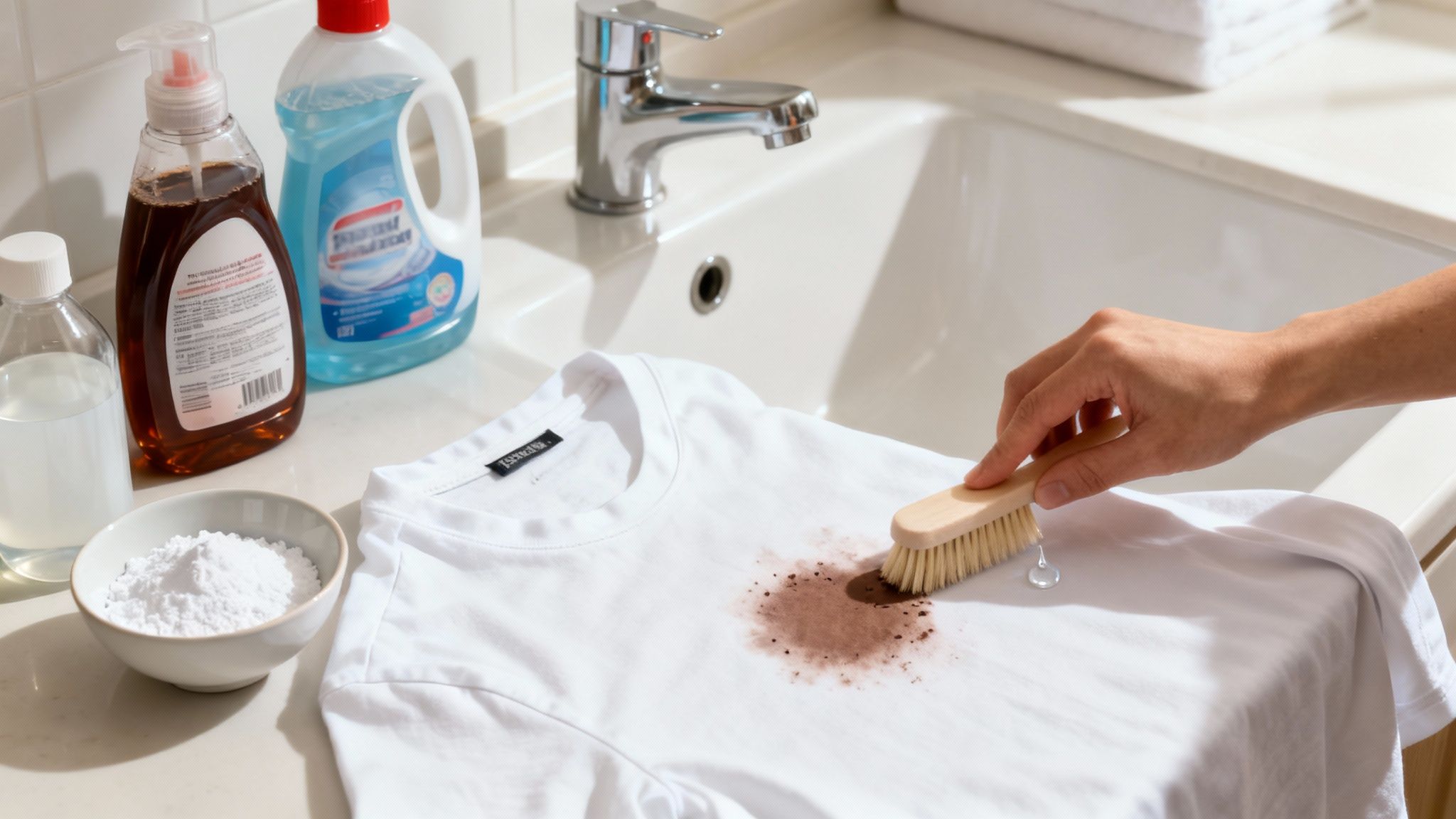
Once you've scraped away the excess chocolate and given the spot a good cold-water rinse, it's time to get down to business. You'd be surprised what you can accomplish with a few common household items. This is where a little laundry savvy can rescue a favorite white shirt from becoming a rag.
The secret to chocolate's stubbornness is the cocoa butter—it's greasy. To counter that, your best friends are a high-quality liquid laundry detergent or a clear dish soap known for cutting through grease. These products are formulated to break down and lift away oils, which is precisely the problem you're trying to solve.
The Best Pre-Treatment Method
Take a small amount of your chosen liquid detergent or dish soap and gently work it into the damp stain. You can use your fingers or a soft-bristled brush, like an old toothbrush. Now, the important part: let it sit for at least five to ten minutes. This "dwell time" is crucial, as it allows the cleaner to really penetrate the fabric's fibers and start dissolving the stain before it even hits the washing machine.
A Word of Caution: It's tempting to scrub the stain into oblivion, but please don't. A gentle, circular motion is all you need. Scrubbing too hard can fray the fabric and actually push the stain deeper, making your job much harder.
It’s no surprise that this is such a common laundry headache. A 2024 LaundryCare survey revealed that 62% of parents with young children deal with chocolate stains weekly. Even more telling, 45% admitted to simply giving up and throwing the item away after a failed attempt. The same survey found that using hot water can permanently set these stains 75% of the time in under ten minutes, which is why sticking to cold water is so critical. You can learn more about the findings on chocolate stain removal.
Give It a Good Soak
For tougher stains or if you prefer a more natural route, a pre-soak can make a world of difference. After applying the detergent, just submerge the garment in a basin of cold water. To give it an extra kick, try adding one of these household heroes:
- White Vinegar: Pour about a half-cup of distilled white vinegar into a gallon of cold water. As a mild acid, vinegar is fantastic at breaking down tannins, which are the dark pigments in cocoa.
- Baking Soda: Mix in a quarter-cup of baking soda. This works as a gentle, natural abrasive and deodorizer, helping to lift the stain without any harsh chemicals.
Let the clothing soak for at least 30 minutes. For a really set-in spot, you can even leave it for a few hours. This prolonged contact gives the solution plenty of time to loosen the stain's grip. While we're focused on chocolate here, many of these same principles apply to other laundry challenges; this general guide to tackling common bed stains shares some similar, useful techniques.
Adapting Your Method for Different Fabrics
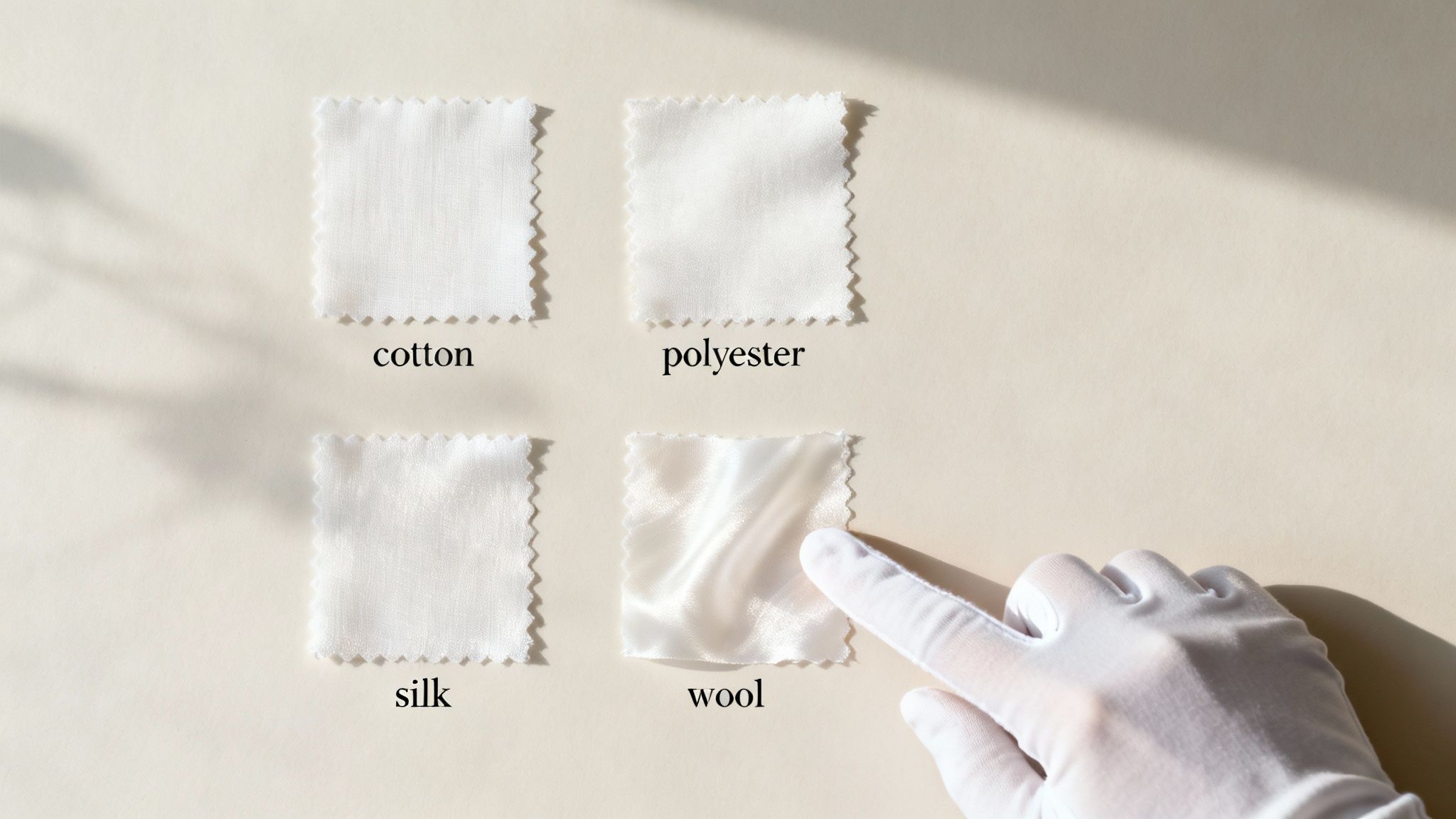
A crisp white cotton t-shirt and a delicate silk blouse might both end up with a chocolate smudge, but they absolutely cannot be treated the same way. Taking a one-size-fits-all approach is a recipe for disaster, and you could end up with a shrunken, stretched, or permanently damaged garment.
Truly knowing how to get chocolate out of white clothes means knowing your fabric first. The material dictates everything—from the type of cleaner you can safely use to how much elbow grease you can apply.
Durable Cottons and Linens
Let's start with the easy ones. For resilient fabrics like cotton, denim, and linen, you have a lot more flexibility. These sturdy materials can handle the direct application of liquid laundry detergent or a dish soap solution without any trouble.
After flushing the back of the stain with cold water, you can gently work the detergent into the fibers with your fingers or a soft-bristled brush. These fabrics are also perfect candidates for a pre-soak in cold water mixed with an oxygen-based bleach alternative. This helps break down the tricky tannins in chocolate without the harshness of chlorine bleach.
Synthetics Like Polyester and Nylon
Synthetic fabrics like polyester, nylon, and rayon are generally tough, but they can be surprisingly sensitive to certain solvents and high heat. It's best to stick with a pH-neutral liquid detergent or simple dish soap for pre-treating these.
Be careful to avoid aggressive scrubbing, as that can cause pilling or snagging on the fabric's surface. Synthetics usually respond well to a simple cold water soak after pre-treatment, which helps lift the stain out before it goes into the main wash cycle.
Handling Delicate Silk and Wool
This is where you need to tread very carefully. Wool and silk are protein-based fibers, and the enzymes found in many standard laundry detergents can literally digest and destroy them, causing holes or weak spots.
For these delicate materials, the process has to be gentle from start to finish:
- Go Easy: Never, ever scrub or wring these fabrics. Gently blot the stain area instead.
- Use the Right Soap: Choose a detergent specifically made for wool or delicates. A few drops in cool water are all you need.
- No Heat, Period: Hot water and hot dryers will ruin silk and wool, causing them to shrink and lose their beautiful shape. Always lay these items flat on a towel to air-dry.
Tackling stains on these fabrics is a delicate art. Silk is especially prone to water spots and color loss, so it requires specialized care. For a deeper dive, check out our guide on removing stains from silk to navigate the process safely.
When You See a "Dry Clean Only" Tag
If that care label says "Dry Clean Only," please believe it. These tags aren't just suggestions—they're there because the fabric, dye, or construction of the garment simply can't handle a water-based wash.
Trying to treat a chocolate stain on a dry-clean-only item at home is a huge gamble. You risk creating water rings, shrinkage, or color bleeding that even a professional can't fix later. For these special pieces, your best and only move is to gently scrape off any excess solid chocolate and bring it straight to a professional. Trust us at Columbia Pike Laundry—it’s the only surefire way to save your garment.
To make things easier, here's a quick comparison of the best methods for each fabric type.
Chocolate Stain Removal by Fabric Type
Remembering these simple rules can be the difference between a minor cleanup and a ruined piece of clothing. When in doubt, always start with the gentlest method first.
The Final Wash and Dry: Don't Rush This Critical Step

After all that careful pre-treating, it’s tempting to just toss the garment in the wash and hope for the best. But this final step is where your hard work really pays off, and a few smart choices here make all the difference.
The most important rule is to wash the item in cold water. This might feel counterintuitive, but hot water is the enemy of a chocolate stain. It can actually "cook" the proteins and fats from the milk and cocoa, setting any faint residue permanently into the fabric fibers. Use a high-quality liquid detergent—ideally one with enzymes—to help break down any last traces of oil.
The All-Important Dryer Check
Before that garment goes anywhere near your dryer, you need to play detective. Once the wash cycle finishes, pull the item out and inspect the area closely, preferably under a bright light.
Look for any hint of the stain. Even a faint, yellowish shadow means the job isn't quite done.
The Golden Rule of Stain Removal: Never, ever put a stained garment in an automatic dryer. The intense heat will bake the stain into the fabric, turning a treatable spot into a permanent fixture. This is the point of no return for most stains.
If you do see some lingering discoloration, don't worry. Just repeat your pre-treatment step on the damp fabric—dabbing on a bit more detergent or stain remover—and run it through another cold wash cycle. Patience here will save your garment.
Why Air-Drying Is Your Best Friend
Your safest bet is to let the item air-dry. Hang it up or lay it flat on a clean towel. Once the fabric is completely dry, you'll be able to see with absolute certainty if every last trace of the chocolate is gone. It's a simple step, but it’s a non-negotiable part of mastering how to get chocolate out of white clothes.
Believe me, you're not alone in this battle. Chocolate stain claims in the U.S. hit a staggering 12 million annually, and white clothes account for 55% of those incidents. Milk chocolate's high fat content allows it to sink deep into cotton, leading to a home success rate of only 42%. People often skip simple tricks, like a 30-minute vinegar soak, which can dissolve up to 70% of the residue before you even start.
Once that chocolate stain is officially gone, the next step is keeping your whites looking their best. You can find some great tips for keeping white fabrics bright to ensure they stay crisp and clean.
When to Trust a Professional Laundry Service
So, you've scraped, blotted, soaked, and washed, but a faint, ghostly shadow of that chocolate stain just won't budge. We've all been there. While DIY methods can work wonders, sometimes the best strategy is knowing when to call it quits and let a professional take over.
Continuing the fight at home can sometimes do more harm than good, and recognizing that moment is key to saving your favorite white clothes.
Some Stains Are Just Too Stubborn
Let's be honest, not all stains are created equal. A chocolate smudge that accidentally went through a hot dryer cycle is a whole different beast. The heat has essentially baked the stain's oils and tannins deep into the fabric fibers, making it incredibly difficult for household products to break down.
The same goes for old, set-in stains you might discover on a garment you just pulled out of storage. These situations call for the heavy-duty solvents and specialized techniques that only a professional cleaner has. They can tackle deeply bonded stains without destroying the fabric in the process.
When the Fabric Is Too Precious
Often, the biggest deciding factor isn't the stain, but the fabric itself. That "Dry Clean Only" tag on your favorite silk blouse or wool blazer? It's not a gentle suggestion—it's a critical instruction. Water can cause irreversible damage to these materials, from shrinkage and weird water spots to color bleeding.
Certain items should always head straight to the professionals:
- Heirloom Garments: A vintage lace tablecloth or a family christening gown holds far too much sentimental value to risk an at-home cleaning experiment.
- Delicate Fabrics: Materials like silk, wool, and some rayons can be weakened or even dissolved by the enzymes found in many standard laundry detergents.
- Structured Items: Think tailored blazers, lined trousers, and formal dresses. Washing them at home can completely ruin their shape and structure.
Professional dry cleaners use specialized, eco-friendly solvents that dissolve tough stains without water. This is by far the safest and most effective way to care for your most delicate and valuable clothing.
Reclaiming Your Time and Peace of Mind
Beyond tough stains and fragile fabrics, there’s a simple, practical reason to trust the experts: your time is valuable. If you're a busy parent or professional juggling a million things, spending an hour or more wrestling with a stubborn chocolate stain just isn't a good use of your energy.
Using a service like Columbia Pike Laundry’s pickup and delivery is about more than just getting a stain out; it’s about efficiency and guaranteed results. You don't have to second-guess your methods or worry about making things worse. You just put the item in a bag, and we handle the rest.
We understand the science behind what makes a stain stick, which is exactly how dry cleaners remove stains that seem impossible at home. It’s the ultimate stress-free solution for a frustrating laundry problem, giving you back both your time and your perfectly clean clothes.
Your Top Chocolate Stain Questions, Answered
Even when you know the basic steps, chocolate stains can still be tricky. I get these questions all the time, so let's walk through some of the common curveballs you might face during your laundry battle.
Is It Okay to Use Bleach on a Chocolate Stain?
Hold on before you reach for that bottle of chlorine bleach! It seems like the perfect solution for white clothes, but it can backfire badly with chocolate. Chlorine can actually react with the proteins in the stain, setting it as a permanent yellow mark or even damaging the fabric's fibers.
A much safer bet is an oxygen-based bleach, like OxiClean. These are formulated to tackle organic stains like chocolate without the harshness. Think of chlorine bleach as your absolute last-ditch effort, only after you’ve tried everything else.
What if the Stain Already Went Through the Dryer?
Ah, the dreaded set-in stain. We've all been there. Once a chocolate stain has been "baked" by the heat of a dryer, the oily part really digs into the fabric fibers. It’s a tough challenge, but not necessarily a lost cause.
You just have to get more aggressive with your pre-treatment.
- Start by applying a heavy-duty liquid laundry detergent directly onto the old stain.
- Let it sit for at least a few hours—or even overnight. This gives the degreasing agents a real chance to work their magic and break down those set-in oils.
- Before washing, gently rub the fabric together to really work the detergent deep into the fibers. Then, rewash in the warmest water the care label allows.
The key is to always air-dry the garment afterward to see if the stain is truly gone. Don't be surprised if this takes a couple of rounds. If that stain just won't budge after a few tries, it’s probably time to call in the pros.
Does the Type of Chocolate Matter?
It sure does. The makeup of the chocolate directly impacts the kind of stain you're fighting, which can tweak your strategy a bit.
A dark chocolate stain is heavy on tannins (the same stuff in red wine and tea), leaving a deep, dark pigment. On the other hand, milk and white chocolate have a much higher fat content from cocoa butter, which means you’re dealing with a greasier, oil-based stain.
The good news is that the core method—scrape, flush with cold water, pre-treat—works for all of them. But for a stubborn dark chocolate stain, you might find an extra soak in a diluted white vinegar solution really helps break down those tannins after you’ve dealt with the oily component.
How Can I Keep My Kids from Getting Chocolate on Everything?
With kids, prevention is your best friend. A few smart habits can save you a world of laundry grief. For toddlers, bibs and aprons are your non-negotiable first line of defense during snack time.
It also helps to serve chocolate in smaller, bite-sized pieces to cut down on melting and smearing. And let's be realistic—if the kids are dressed in their Sunday best, maybe that’s the day for a less messy treat. For those inevitable on-the-go accidents, keeping a stain remover pen in your bag can be a real lifesaver for tackling a spot before it has any chance to set.
Battling a stain that won’t quit or dealing with a delicate fabric you can’t risk? Columbia Pike Laundry takes the stress out of tough laundry challenges. Our professional-grade cleaning and convenient pickup and delivery service give you back your time and your perfectly white clothes. Schedule your pickup today.
Free pickup, expert care, delivered back to your door.
Popular Blog Articles






Meet the Author
Daniel Logan didn’t start CPL because he loved laundry. He started it because his family was drowning in time debt, and laundry was one of the biggest weights.
Mornings were chaos with two kids under 5. Evenings felt like catch-up. And weekends? Gone to sorting socks and folding piles.
He knew his story wasn’t unique. So he built a business that gave families like his just a little bit of breathing room one load at a time.
With no laundry experience but deep tech skills, Daniel rolled up his sleeves, doing every job himself while building systems that turned it into a modern laundry service that saves customers time, simplifies their lives, and delivers reliability they can count on.
That’s where CPL began. Not from a playbook, but from pain. From one dad trying to buy back time: for himself, and for every household like his.
Free pickup, expert care, delivered back to your door.