
How to Choose Between Wash and Dry Cleaning Easily
Columbia Pike Laundry offers pickup & delivery across Northern Virginia.
Laundry day in Arlington can feel like a never-ending puzzle when every piece of clothing demands special care. For busy moms managing a family’s wardrobe, mastering the art of reading fabric care labels is your foundation for saving time and keeping clothes looking new. By focusing on understanding care label symbols and fabric needs, you can confidently choose between washing or dry cleaning while sidestepping laundry mishaps and protecting your family’s favorite outfits.
Quick Summary
| Key Point | Explanation |
|---|---|
| 1. Assess Care Labels First | Read care labels to avoid damaging your clothes; they provide essential cleaning instructions and symbols for each fabric type. |
| 2. Sort by Soil Level and Stains | Organize laundry based on how soiled items are, ensuring appropriate treatment for varying levels of dirt and specific stains. |
| 3. Customize for Family Needs | Take into account family members’ health and lifestyle when selecting cleaning methods and detergents to ensure optimal care. |
| 4. Choose Appropriate Cleaning Methods | Understand the right cleaning methods for different fabrics to maintain quality and longevity while avoiding damage. |
| 5. Verify Cleanliness After Washing | Conduct a thorough inspection post-wash to ensure garments are clean, free of odors, and retain their original quality. |
Step 1: Assess Fabric and Care Labels
Choosing the right cleaning method starts with carefully reading your garment’s care label. These small tags contain critical information that prevents fabric damage and ensures your clothing stays looking its best. Understanding these symbols is your first line of defense against accidental clothing destruction.
To effectively assess care labels, begin by looking for the standard cleaning symbols, which provide clear guidance on washing, drying, and special handling requirements. Deciphering fabric care symbols requires attention to several key details:
- Machine washable items typically show a washtub symbol
- Dry clean only garments have a circle symbol
- Hand wash labels feature a washtub with a hand
- Do not wash items have a crossed-out washtub
Fabric composition plays a crucial role in determining the appropriate cleaning method. Natural fibers like wool, silk, and linen often require more delicate handling compared to synthetic materials. Pay close attention to symbols indicating water temperature, ironing instructions, and bleach compatibility.
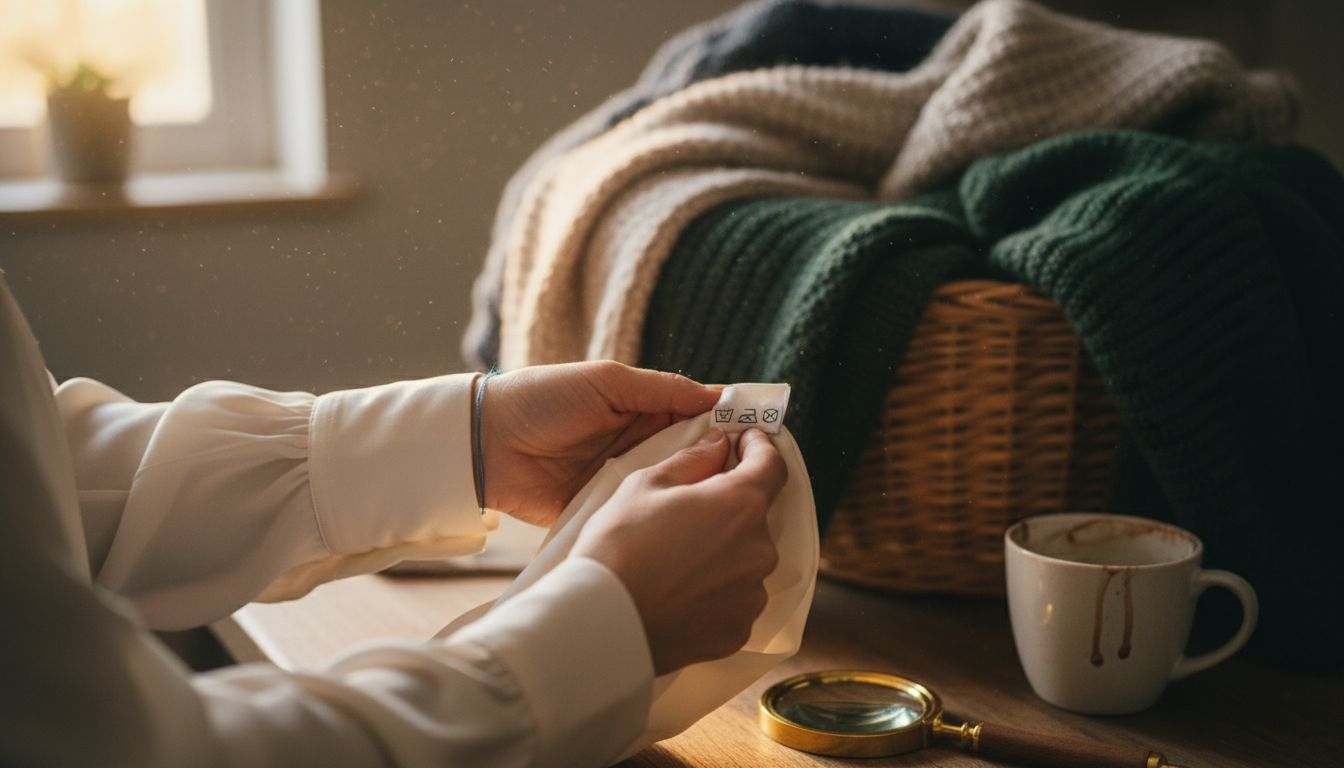
Here’s a quick reference for understanding key laundry symbols and their recommended care methods:
| Symbol Appearance | Meaning | Suitable Fabrics | Precaution or Note |
|---|---|---|---|
| Washtub | Machine Wash | Cotton, polyester, blends | Use label-stated temperature |
| Washtub with hand | Hand Wash | Wool, silk, delicate items | Use gentle detergent, avoid wringing |
| Circle | Dry Clean Only | Wool, silk, structured items | Take to professional cleaner |
| Crossed-out washtub | Do Not Wash | Leather, suede, specialty | Consult a specialist for cleaning |
Professional cleaning experts recommend always checking the care label before attempting any cleaning process to prevent potential fabric damage.
If you encounter complex or unfamiliar symbols, consult a professional cleaner who can provide expert guidance on proper garment maintenance.
Pro tip: Keep a small magnifying glass near your laundry area to help you read those tiny, hard-to-see care label symbols more easily.
Step 2: Sort Items by Soil Level and Stains
Sorting your laundry effectively is crucial for achieving the best cleaning results and preserving your garments. The process involves more than just separating whites from colors - you need to strategically organize your clothes based on soil levels, fabric types, and specific stain characteristics.
Sorting laundry by soil level helps prevent dirt transfer and ensures each item receives the appropriate cleaning treatment. Here’s how to categorize your laundry:
- Heavily soiled items: Work clothes, gardening attire, children’s playwear
- Moderately soiled clothing: Regular daily wear, office attire
- Lightly soiled garments: Dress shirts, delicate items worn briefly
When dealing with stains, create separate piles based on the type and intensity of soiling. Different stains require specific pre-treatment approaches - for example, grease stains need different handling compared to grass or wine marks.
Professional cleaners recommend pre-treating stains immediately to prevent them from setting permanently into fabric fibers.
Consider using color-coded laundry bags or hampers to simplify your sorting process, making laundry day more efficient and organized.
Pro tip: Keep a stain removal pen or small spray bottle near your laundry area to quickly treat spots before they become permanent.
Step 3: Evaluate Special Family Needs
Every family has unique laundry challenges that require a personalized approach to cleaning. Addressing special family needs means considering individual health requirements, fabric sensitivities, and lifestyle factors that impact your clothing care routine.
When evaluating your family’s specific laundry needs, consider these key factors:
- Allergies and skin sensitivities: Select hypoallergenic detergents
- Infant and child clothing: Require extra gentle washing cycles
- Athletic or work uniforms: Need specialized stain and odor treatments
- Medical conditions: May require sanitization or specific cleaning protocols
- Lifestyle considerations: Outdoor work, sports activities, special fabric needs
Special considerations might include using fragrance-free detergents for sensitive skin, selecting sanitize cycles for medical professionals, or implementing extra rinse cycles for families with respiratory conditions.
Customizing your laundry approach ensures that each family member’s clothing receives optimal care while addressing individual health and comfort requirements.
Consider creating a family laundry guide that documents specific instructions for each household member’s unique clothing care needs.
Pro tip: Create a small reference chart in your laundry area listing each family member’s specific clothing care requirements for quick and easy reference.
Step 4: Select the Optimal Cleaning Method
Choosing the right cleaning method is crucial for maintaining your clothing’s quality, appearance, and longevity. Optimal cleaning techniques require careful consideration of fabric type, garment construction, and specific care requirements.
To determine the best cleaning approach, evaluate these key factors:
- Fabric composition: Natural vs. synthetic fibers
- Garment construction: Delicate embellishments, linings, structural elements
- Care label instructions: Specific manufacturer recommendations
- Stain type and intensity: Different soils require different treatments
- Potential for color or shape distortion: Risk assessment for each cleaning method
Some fabrics like silk, wool, and structured garments typically require professional dry cleaning, while cotton, linens, and most everyday clothing can be machine washed. Understanding dry cleaning solvents helps you make informed decisions about specialized fabric care.

The following table summarizes optimal laundering methods for common fabric types:
| Fabric Type | Preferred Cleaning Method | Water Temperature | Recommended Detergent Type |
|---|---|---|---|
| Cotton | Machine wash | Warm or cold | Standard or heavy-duty |
| Wool | Hand wash or dry clean | Cool or lukewarm | Wool-specific |
| Silk | Hand wash or dry clean | Cold | Mild or silk detergent |
| Synthetic | Machine wash | Warm, as indicated | Standard |
| Linen | Machine or hand wash | Cold or lukewarm | Mild |
Professional cleaning experts recommend always prioritizing the garment’s care label instructions to prevent potential damage and maintain clothing quality.
If you are uncertain about the best cleaning method, consult a professional cleaner who can provide personalized guidance for your specific garments.
Pro tip: Keep a small magnifying glass near your laundry area to help you read care labels and identify the recommended cleaning method more easily.
Step 5: Verify Cleanliness and Freshness
Ensuring your clothes are truly clean and fresh goes beyond just running them through a washing cycle. Hygienically clean textile practices involve careful inspection and assessment of your laundered items to guarantee optimal results.
When verifying cleanliness and freshness, focus on these key evaluation points:
- Visual inspection: Check for any remaining stains or discoloration
- Odor assessment: Smell clothes to confirm complete odor removal
- Texture evaluation: Ensure fabrics feel soft and clean
- Stain elimination: Verify complete removal of original soil marks
- Color preservation: Confirm no color bleeding or fading occurred
Laundering best practices recommend performing a systematic check immediately after cleaning. Look closely under good lighting, run your hands over the fabric, and do a quick smell test to ensure complete cleaning.
Professional cleaners suggest treating your clothes like a quality control expert would - with meticulous attention to detail and thorough examination.
If you notice any imperfections, consider rewashing or seeking professional cleaning services for stubborn issues.
Pro tip: Keep a small, well-lit area near your laundry space specifically for final garment inspection to catch any cleaning oversights.
Simplify Your Choice Between Wash and Dry Cleaning with Columbia Pike Laundry
Choosing between washing and dry cleaning can feel overwhelming especially when fabric care labels and stain types come into play. You want to protect your clothes while ensuring they come out fresh and spotless. Columbia Pike Laundry understands these challenges and offers expert solutions that take the guesswork out of proper garment care. Whether you need delicate dry cleaning or dependable wash and fold services, we tailor our approach to your fabrics and special family needs.
Experience the confidence of professional cleaning backed by local trust and advanced technology. Explore our Dry Cleaning | Laundry Tips to learn more about how we handle delicate fabrics. Ready for Laundry Relief | Laundry Tips that fits your busy lifestyle? Visit us at Columbia Pike Laundry today and schedule your pickup or drop-off. Take the next step toward clothing care that saves your time and keeps your wardrobe pristine.
Frequently Asked Questions
How do I determine if an item should be washed or dry cleaned?
To determine the appropriate cleaning method, check the care label on your garment. The label will indicate whether it is machine washable, hand wash only, or dry clean only, allowing you to make an informed decision immediately.
What are the signs that a fabric requires dry cleaning?
Fabrics like silk, wool, and structured garments often require dry cleaning due to their delicate nature. If the care label has a circle symbol, you should take it to a professional cleaner to ensure the fabric’s integrity is maintained.
Can I wash items labeled for dry cleaning at home?
While it’s possible to wash some items at home, doing so can lead to damage if they are labeled ‘dry clean only.’ Always follow care label instructions to avoid shrinking, color fading, or other potential fabric issues that could arise from improper cleaning.
How can I sort my laundry effectively between washing and dry cleaning?
Sort your laundry based on soil level, fabric type, and care instructions. Create separate piles for heavily soiled, moderately soiled, and light items, as well as distinguishing dry clean-only garments to ensure each item receives the appropriate treatment.
What should I do if I’m unsure about cleaning a garment?
If you’re uncertain about how to clean a garment, consult the care label first. If the instructions are unclear or the fabric is unfamiliar, consider reaching out to a professional cleaner for expert advice on the best cleaning method to use.
Recommended
Free pickup, expert care, delivered back to your door.
Popular Blog Articles



Meet the Author
Daniel Logan didn’t start CPL because he loved laundry. He started it because his family was drowning in time debt, and laundry was one of the biggest weights.
Mornings were chaos with two kids under 5. Evenings felt like catch-up. And weekends? Gone to sorting socks and folding piles.
He knew his story wasn’t unique. So he built a business that gave families like his just a little bit of breathing room one load at a time.
With no laundry experience but deep tech skills, Daniel rolled up his sleeves, doing every job himself while building systems that turned it into a modern laundry service that saves customers time, simplifies their lives, and delivers reliability they can count on.
That’s where CPL began. Not from a playbook, but from pain. From one dad trying to buy back time: for himself, and for every household like his.
Free pickup, expert care, delivered back to your door.