
How dry cleaning works and why Arlington families should care

Columbia Pike Laundry offers pickup & delivery across Northern Virginia.
TL;DR:
- Dry cleaning uses chemical solvents instead of water to clean delicate fabrics, preventing damage like shrinking or warping. Modern machines recover nearly all solvents, reducing environmental impact, while healthier alternatives replace PERC amid regulatory changes. Choosing in-house, eco-friendly cleaners ensures better garment care, safety, and longevity for your wardrobe.
Dry cleaning isn’t dry. That’s the first thing most people get wrong. Your favorite wool blazer or silk dress doesn’t come out of a machine that blasted it with heat and air; it comes out of one that bathed it in specialized chemical solvents. Once you understand what actually happens to your clothes during this process, you’ll make smarter choices about which items to bring in, which solvents your cleaner uses, and whether the service you’re using truly protects your garments. For busy Arlington families and professionals juggling packed schedules, those choices matter more than most people realize.
Key Takeaways
| Point | Details |
|---|---|
| Dry cleaning isn’t ‘dry’ | The process uses specialized liquid solvents, not water, to clean delicate and structured fabrics safely. |
| Eco-friendly options rising | Modern green solvents are as effective as traditional ones and much safer for families and the planet. |
| Solvent recovery is high | Innovative machinery now recaptures up to 99.99% of cleaning solvents, minimizing waste and exposure. |
| Choose cleaning by item | Not every garment needs dry cleaning—check labels and ask your cleaner about green methods if you want safer care. |
| Convenience meets quality | The right professional service protects your wardrobe and saves time, especially for busy Arlington families. |
What is dry cleaning, and why does it matter?
The name is misleading, but the logic behind it is solid. Dry cleaning uses liquid chemical solvents instead of water to lift stains, oils, and dirt from fabric fibers. The word “dry” refers to the absence of water, not the absence of liquid altogether. This distinction is critical for understanding why the process exists in the first place.
Water does something specific and often damaging to certain materials: it causes fibers to swell, shrink, lose shape, or bleed color. Wool felts. Silk warps. Structured suits lose their tailoring. For these items, a water-free solvent is the only safe cleaning method. Understanding why dry clean certain fabrics helps you protect the garments that cost you the most and matter the most.
The solvent that built the dry cleaning industry is tetrachloroethylene, commonly called PERC. It’s effective for oils and grease but is being phased out by the EPA with a complete ban expected by approximately 2034. That regulatory shift is already changing what solvents your local cleaner uses, which we’ll cover in detail shortly.
PERC has been the industry’s workhorse solvent for decades. Its ability to dissolve oils and greases without damaging most fibers made it the default choice worldwide. But its classification as a probable carcinogen and its persistence in soil and groundwater have made it a regulatory target. The EPA’s phaseout is accelerating the adoption of cleaner alternatives that are both safer for workers and gentler on the planet.
Here’s a quick look at the types of garments and household items that genuinely benefit from dry cleaning:
- Wool suits, blazers, and coats that would shrink or felt in water
- Silk blouses, dresses, and ties that water-stain or warp easily
- Rayon and viscose garments that lose shape when wet
- Heavily structured items like tailored jackets with interfacing and padding
- Specialty comforters and duvet covers with delicate fills or covers
- Drapes and curtains that carry care labels specifying dry clean only
- Embellished or beaded garments where water would damage decorative elements
If you’re still unsure whether a specific item belongs in your laundry machine or at a professional cleaner, reviewing what dry cleaning actually involves in full detail can help you avoid an expensive mistake.
Step-by-step: How the dry cleaning process works
Understanding why dry cleaning is chosen for certain items sets up a closer look at what actually happens behind the store counter. The process is more methodical than most people expect. It isn’t simply “drop it off, pick it up clean.” Each stage involves trained judgment and specialized equipment.
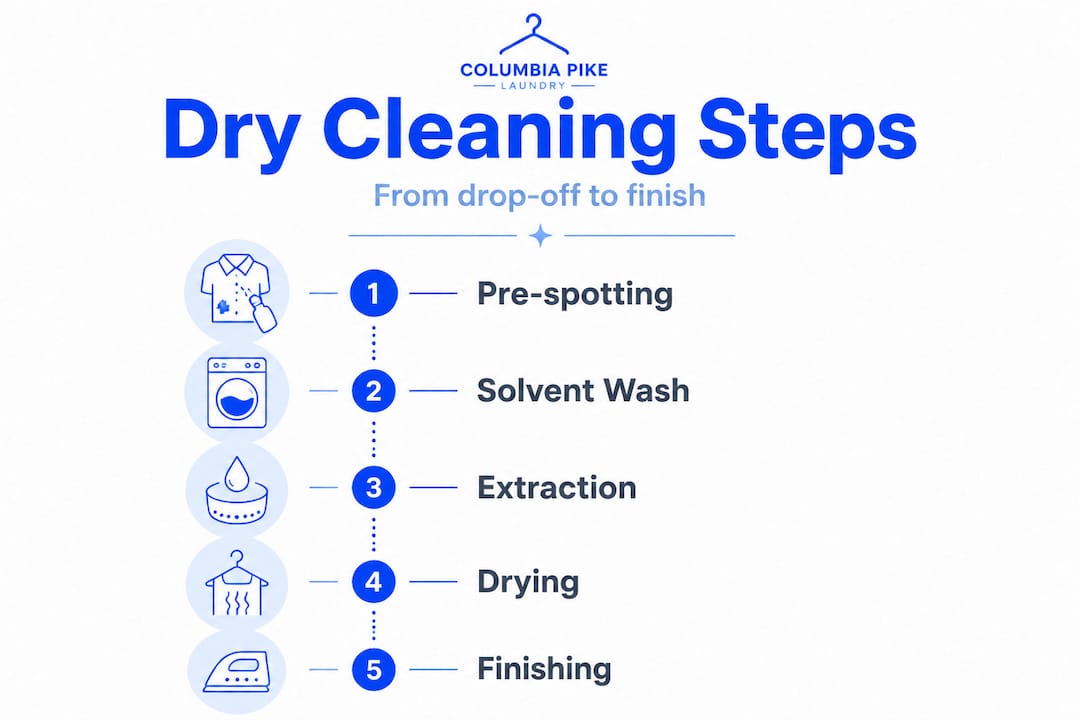
Here’s the full sequence:
- Intake and tagging. Every item is logged, tagged with a unique identifier, and inspected for existing damage, missing buttons, loose seams, or care label instructions. This protects both you and the cleaner.
- Pre-spotting. A trained technician applies targeted stain treatments to problem areas before anything goes near a machine. Different stains require different treatments: protein stains, ink, food, and oils each respond to specific chemicals.
- Loading the machine. Garments go into a large drum-style machine with the appropriate solvent. Unlike home washers, dry cleaning machines combine washing and drying in a single sealed unit.
- The wash cycle. The solvent circulates through the drum, dissolving oils and carrying suspended dirt away from the fabric. The temperature and agitation level are carefully calibrated to the load.
- Solvent recovery. This is where modern machines prove their worth. Closed-loop filtration and distillation allow modern machines to recover approximately 99.99% of solvent for reuse, dramatically reducing waste and chemical exposure.
- Drying and deodorizing. Warm air cycles through the drum, evaporating residual solvent from the garments. A fresh-air cycle removes any remaining odor.
- Finishing. This is the stage that separates average cleaners from great ones. Pressing, steaming, and hand-finishing restore a garment’s original shape and appearance. Structured garments like suits require skilled attention at this step.
- Final inspection and packaging. Each item is checked one more time before being bagged, tagged, and returned to you.
| Stage | What happens | Why it matters |
|---|---|---|
| Pre-spotting | Targeted stain treatment | Prevents set-in stains during cleaning |
| Solvent wash | Chemical dissolution of oils and soils | Safe for water-sensitive fabrics |
| Solvent recovery | 99.99% recapture via closed loop | Environmental and cost efficiency |
| Finishing | Pressing and steaming | Restores original structure and appearance |
| Final inspection | Quality check before pickup or delivery | Catches any missed spots or damage |
Pro Tip: When choosing a cleaner, ask whether they perform finishing in-house. Some budget operations skip proper pressing or outsource it, which shows in the final result. Also ask whether their machines use a fully closed-loop dry cleaning process for solvent recovery. That question alone tells you a lot about how seriously they take quality and safety.
Old and new: Comparing solvents and environmental impact
While the traditional process relies on well-known chemistry, new environmental and safety demands are rapidly changing which solvents cleaners use. This evolution matters to you as a consumer, especially if you have young children at home, care about environmental footprint, or have skin sensitivities.
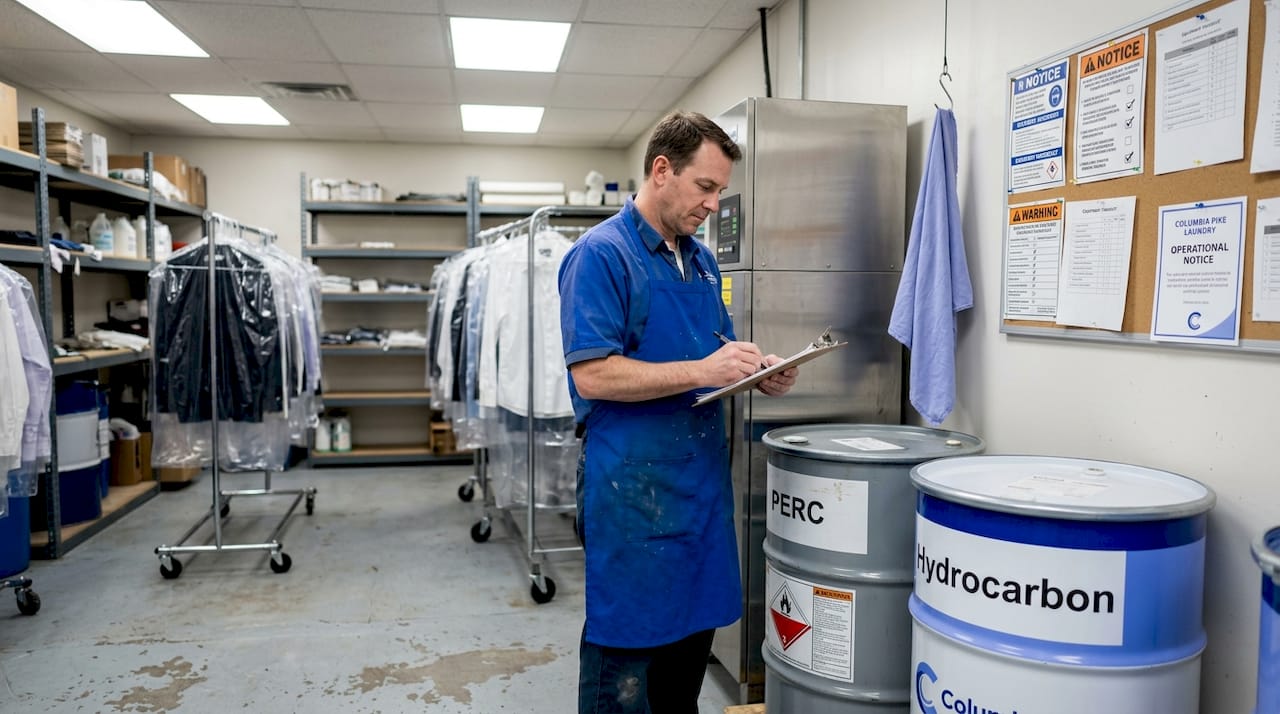
Here’s how the major solvents stack up:
| Solvent | Type | Environmental impact | Fabric gentleness | Cost |
|---|---|---|---|---|
| PERC | Synthetic chlorinated | High (carcinogen, EPA regulated) | Effective but harsh long-term | Low |
| Hydrocarbon | Petroleum-based | Moderate (flammable) | Gentler than PERC | Moderate |
| Silicone (GreenEarth D5) | Silicone-based | Low (biodegrades to sand, water, CO2) | Very gentle | Moderate |
| Liquid CO2 | Carbon dioxide | Very low (no chemical residue) | Excellent | High |
| Professional wet cleaning | Water-based | Very low | Excellent for many fabrics | Moderate |
Research on alternative green solvents shows that options like ethyl lactate and gamma-terpinene match PERC’s performance for many common stains, while modern machines cut energy consumption by approximately 50% compared to older equipment. That’s not a minor improvement. It represents a meaningful shift in how environmentally responsible a professional cleaning visit can be.
The advantages of in-house dry cleaning become even more apparent when you consider solvent choice. A cleaner who controls every step of the process in their own facility can make deliberate decisions about which solvents they use and maintain stricter quality control than one who contracts out the actual cleaning.
Here are the key questions worth asking your cleaner before you commit:
- What solvent do you currently use? Any reputable cleaner should answer this without hesitation.
- Are you transitioning away from PERC? Given the EPA timeline, cleaners without a transition plan may face compliance issues in the coming years.
- Do you offer professional wet cleaning as an alternative? For many fabrics, wet cleaning alternatives are now practical and effective.
- How do you handle solvent disposal? Responsible cleaners use certified waste handlers.
- Are your machines modern closed-loop systems? Older open machines release more solvent vapor and are less efficient.
These questions help you find a cleaner who takes both your garments and your family’s health seriously. Busy parents in particular will find this consideration worth a few minutes of their time. The benefits of professional dry cleaning for busy parents extend well beyond saved time when you factor in safety and fabric longevity.
When should you choose dry cleaning?
Having covered solvents and their impacts, you can make more informed choices about when to opt for professional services and when to go DIY. Not everything needs dry cleaning, and over-cleaning certain items can shorten their life. The goal is to match the right process to the right garment.
These items consistently benefit from professional dry cleaning:
- Wool garments of any kind: Suits, coats, sweaters with structure, and tailored trousers
- Silk and satin: Blouses, dresses, ties, and formal wear
- Rayon and viscose: These fibers are highly water-sensitive and distort easily
- Lined garments: Jackets, blazers, and skirts with lining often have two fabrics with different shrinkage rates, making water-washing risky
- Specialty comforters: Down or silk-filled comforters with delicate shell fabrics
- Heavily beaded or embellished items: Water and machine agitation can loosen or damage decorations
Signs that an item needs professional attention regardless of fabric include: a stain that has already been washed and set, strong odors that home washing hasn’t resolved, visible loss of structure or shape, or a care label that reads “dry clean only.”
Not every item labeled “dry clean” is absolutely required to go to a professional cleaner, but for items labeled “dry clean only,” you should treat that instruction as firm. A complete guide to fabrics needing dry cleaning breaks this down fabric by fabric if you want to get precise.
Professional wet cleaning (water-based and increasingly eco-friendly) is now a viable option for some garments that previously required solvent-based dry cleaning. This is worth asking about if you prefer to avoid solvents entirely.
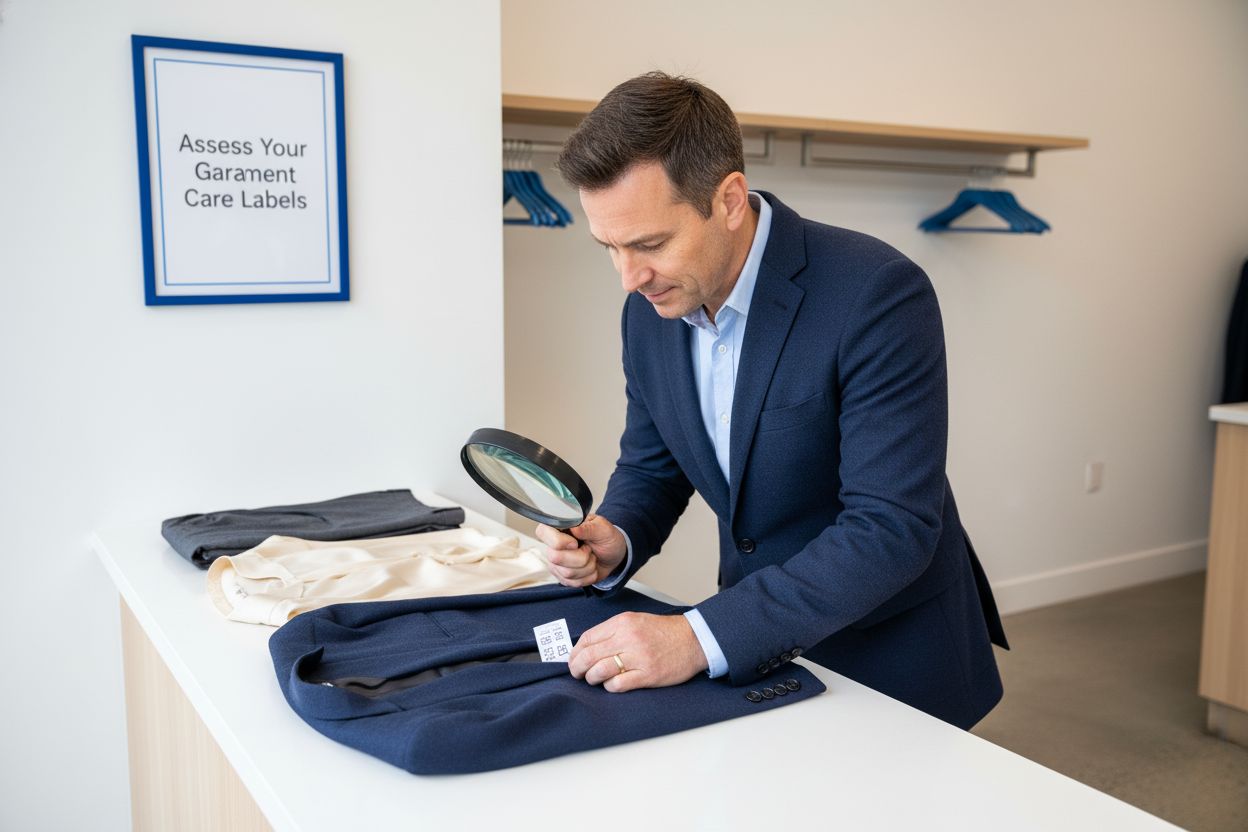
Pro Tip: Always check care labels before assuming. When in doubt, bring the item in and ask a professional to assess it. Between professional cleanings, you can also extend the life of your garments by freshening clothes naturally between wears, reducing how often each piece needs a full cleaning cycle.
The hidden value: What most people overlook about modern dry cleaning
Most families approach dry cleaning as a necessary inconvenience. You drop things off when they absolutely can’t be washed at home and pick them up when you have time. That’s a functional mindset, but it misses what the best modern dry cleaning services actually offer.
The energy story alone is striking. Modern dry cleaning equipment has cut energy consumption by 50% compared to older machines, and closed-loop solvent recovery means almost nothing is wasted or discharged into the environment. That’s not a marketing claim. It reflects genuine engineering improvements in the equipment that quality cleaners invest in.
There’s also the longevity factor. A well-maintained garment that gets professionally cleaned correctly, every time, will outlast one that gets incorrectly washed at home by years. Think about what you paid for a well-tailored suit or a quality winter coat. The cost of professional cleaning several times a year is a fraction of replacing that item early because home washing slowly broke down the fibers, interfacing, or structure.
What we’ve noticed at Columbia Pike Laundry is that customers who understand the process become better customers in the best possible way. They bring in items at the right time rather than after a stain has set for a week. They ask informed questions. They actually read care labels. And they get better results because they’re working with us instead of simply handing things over and hoping.
The value of using a local commercial laundry service isn’t just about avoiding the inconvenience of laundromats. It’s about accessing professional judgment, better equipment, and a level of accountability that you simply can’t replicate with a home machine and a bottle of detergent.
There’s one more dimension worth calling out: in-house cleaning. Many laundry platforms function as middlemen, accepting your clothes and shipping them to a third-party facility. When something goes wrong, accountability evaporates. A cleaner who handles everything in-house has nowhere to hide, which is exactly the incentive structure that produces consistent, high-quality results.
Professional help for your laundry — try it the easy way
Now that you understand what goes into a proper dry cleaning cycle, from solvent chemistry to finishing and pressing, you’re in a much better position to choose a service that takes those details seriously. At Columbia Pike Laundry, located at 2602 Columbia Pike in Arlington, we handle every garment in-house, so we control quality at every step. You can drop off directly, or schedule pickup and delivery through our simple laundry service online or through our app. Standard turnaround is 48 hours, with express options available. Whether it’s a tailored suit, a silk blouse, or a king-size comforter, we’ll match the right process to each item and return it folded, pressed, and ready to use.
Frequently asked questions
Is dry cleaning really safer for delicate fabrics?
Yes, dry cleaning uses gentle chemical solvents that dissolve oils without causing the fiber swelling, shrinkage, or distortion that water produces, making it the safest choice for wool, silk, and structured garments.
What is replacing PERC in most dry cleaning shops?
Common alternatives now include hydrocarbon solvents, silicone-based options, liquid CO2, and water-based professional wet cleaning, each offering a safer environmental profile than traditional PERC.
How eco-friendly is modern dry cleaning?
Modern dry cleaning uses closed-loop solvent recovery systems that recapture approximately 99.99% of solvent, and newer equipment cuts energy use by up to 50%, making today’s professional cleaning far greener than it was a decade ago.
Can all stains be removed by dry cleaning?
Dry cleaning excels at oil-based stains, but some water-based stains like certain ink types or older set-in food stains may need specialized pretreatment or a combination of methods to fully remove.
How often should I dry clean my household items?
Comforters and drapes generally benefit from professional cleaning every few months or sooner if visibly soiled, but the care label on each specific item should always guide your final decision.
Free pickup, expert care, delivered back to your door.
Popular Blog Articles



Meet the Author
Daniel Logan didn’t start CPL because he loved laundry. He started it because his family was drowning in time debt, and laundry was one of the biggest weights.
Mornings were chaos with two kids under 5. Evenings felt like catch-up. And weekends? Gone to sorting socks and folding piles.
He knew his story wasn’t unique. So he built a business that gave families like his just a little bit of breathing room one load at a time.
With no laundry experience but deep tech skills, Daniel rolled up his sleeves, doing every job himself while building systems that turned it into a modern laundry service that saves customers time, simplifies their lives, and delivers reliability they can count on.
That’s where CPL began. Not from a playbook, but from pain. From one dad trying to buy back time: for himself, and for every household like his.
Free pickup, expert care, delivered back to your door.